
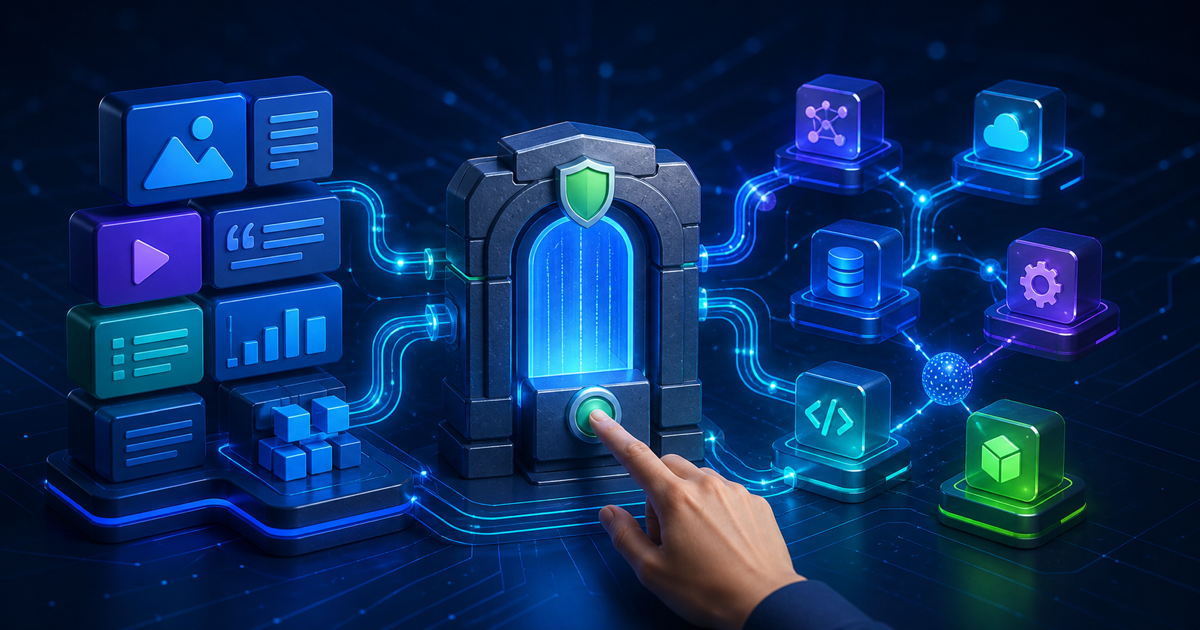
WordPress in 2026 is being pulled in two directions at once: toward easier visual publishing and toward deeper machine-to-machine interaction. Blocks and design tools keep getting more capable, while AI agents, external APIs, and automation demand clearer permissions and structure. Security now sits between those two worlds rather than beside them.
Key Takeaways
- Blocks are becoming a design-system layer, not just a content-editor feature.
- AI is moving from content generation toward development, governance, automation, and agent interaction.
- The Abilities API direction matters because external tools need explicit, permission-aware ways to understand what WordPress can do.
- Security work increasingly includes supply-chain hygiene, least privilege, authenticated APIs, and safe automation.
Blocks Are Turning Into Infrastructure
The block editor started as a way to compose content, but the larger direction is a shared system for templates, patterns, responsive styles, design tokens, and reusable interfaces. WordPress 7.1 continued that movement with responsive styling and state controls that reduce the amount of custom CSS required for common interactions.
For agencies, the opportunity is to build systems editors can safely use rather than delivering pages that only the original developer understands.
AI Is Moving Closer to the Workflow
The WordPress conversation around AI is becoming more practical. Instead of only asking a model to write a paragraph, teams are exploring AI-assisted development, testing, content operations, accessibility checks, support, and structured workflows. WordCamp US 2026 reflected that shift across multiple sessions.
The guardrail is governance. AI output needs the same review standards as human output, plus clear rules about data access, permissions, attribution, and when automation is allowed to act.
The Agentic Web Changes the Interface Question
A traditional website assumes a human visits a page. An agentic web assumes software may query capabilities, retrieve structured information, and perform approved actions on a user’s behalf. That makes APIs and permissions part of the user experience.
WordPress Core work around the Abilities API is important in this context because external clients need a machine-readable description of available actions and whether they are intended for public exposure.
Security Has to Cover Automation, Not Just Logins
Two-factor authentication, updates, backups, and least-privilege accounts are still foundational. But modern WordPress sites also connect to CRMs, payment systems, automation platforms, AI tools, webhooks, and external APIs. Every credential and integration becomes part of the attack surface.
Treat machine accounts like human accounts: give them only the access required, rotate credentials, log important actions, and remove unused integrations.
Media and the Browser Are Doing More Work
WordPress 7.1 introduced client-side media processing in supporting browsers, shifting some image work away from the server. It is a small example of a broader direction: modern browser capabilities can make WordPress more resilient on constrained hosting and reduce expensive server-side processing.
What Site Owners Should Do in 2026
Keep Core and extensions updated, reduce plugin overlap, maintain independent backups, document integrations, and build a staging habit. If you are adopting AI, start with narrow workflows where human review is obvious. If you are rebuilding a site, prefer structured blocks and reusable patterns over page-specific hacks.
The future-facing WordPress stack is not necessarily bigger. It is more intentional, more structured, and easier for both humans and software to understand.
Frequently Asked Questions
Is WordPress adding AI directly to Core?
WordPress development is exploring AI-adjacent infrastructure and workflows, but specific AI features vary by project and plugin. Avoid assuming experimental work is already a stable Core feature.
What is the agentic web?
It describes web experiences where software agents can discover information and, with permission, perform actions for users rather than only displaying pages for human navigation.
Are blocks replacing themes?
No. Themes still define presentation and templates, but block themes and global styles move more of that system into reusable, editor-aware configuration.
Final Thoughts
WordPress in 2026 is becoming more structured for both people and software. Blocks are maturing into design-system infrastructure, while AI and agents raise new questions about permissions, APIs, and governance. Site owners do not need to chase every experiment. They do need a clean, secure, well-structured stack that can adapt as these capabilities become stable.
Leave a Reply